

MENU

Price Is Not Value: What Today’s Prime Central London Market Rewards

Jaffar Al-Saraj of The Collaborative London discussing value creation in Prime Central London property investment.

Why today’s market rewards disciplined acquisition, asset-level judgement and execution, not simply confidence in London property.

Prime Central London has entered a different era.

For years, London property was treated by many investors as a relatively straightforward proposition: buy in a prestigious postcode, hold the asset, and allow the strength of London to do much of the work.

That approach belonged to a different market.

Today, the opportunity is more selective. Softer pricing and greater negotiability have created conditions that can favour buyers, but they have not made every property good value.

That distinction matters.

A discount tells you something about price. It does not necessarily tell you anything about value.

For investors looking at Prime Central London today, the real advantage lies in understanding the individual asset: why it is available, what risks sit beneath the headline price, what could realistically be improved, and whether the numbers still work once acquisition costs, refurbishment, financing, tax and time are properly considered.

Prime Central London Investment in 2026: The Key Point

A softer market creates negotiating opportunities, not automatic bargains. In Prime Central London, value is created when acquisition price, asset quality, micro-location, execution cost and realistic exit potential align.

A softer market creates negotiating opportunities, not automatic bargains.

  • A discount to asking price does not necessarily equal value.
  • Micro-location and individual asset quality can matter more than headline market movements.
  • Refurbishment creates value only when acquisition and execution economics work together.
  • Downside protection should be considered before upside potential.

Why Has Prime Central London Become More Selective?

The current numbers tell an interesting story.

Prime London values were 3.1% lower year-on-year at the end of Q2 2026, according to Cluttons, while other market indices continue to show the effects of the substantial repricing that has taken place since the previous market peak.

Negotiability has also returned. Recent market evidence has shown a significant proportion of transactions completing below asking price, while increased available stock has given buyers greater choice in parts of London.

For some, those conditions look worrying.

For an experienced investor, they can look different.

They create optionality.

But optionality only has value when the buyer knows how to use it.

A property being cheaper than it was several years ago does not automatically make it attractive. Nor does securing 10% below an asking price prove that a buyer has acquired well.

The relevant question is not:

“How much discount did I get?”

It is:

“What is this asset actually worth—and what could it realistically become?”

What Is the Difference Between a Discount and Genuine Value?

Price and value are often treated as interchangeable. They are not.

A seller may need liquidity.

An inherited property may require substantial work.

An owner may be relocating.

A developer may need to recycle capital.

A lease may introduce complexity.

An inefficient layout may disguise the potential of an otherwise strong property.

Or a fundamentally good asset may simply have been positioned poorly for the market.

Each situation can create an opportunity. But each can also create risk.

A property requiring significant refurbishment, for example, may appear inexpensive relative to a completed home nearby. Once construction costs, professional fees, regulation, programme risk and financing are included, the apparent discount can disappear quickly.

Equally, paying more for the right property can sometimes represent better value than buying the cheapest available option.

That is why the distinction matters:

A discount is measurable against an asking price. Value is measurable against the asset’s realistic potential.

Where Is Value Actually Created?

In my experience, value in Prime Central London tends to be created across three interconnected stages.

Prime Central London residential property undergoing interior refurbishment.

Value at Acquisition

The first opportunity is the purchase itself.

Understanding comparable transactions is important, but so is understanding the circumstances surrounding the property.

Why is the owner selling?

How long has the property been available?

Has the asking price reflected current market conditions?

What are the building, tenure and legal considerations?

What assumptions are other buyers making?

And critically: at what price does the risk become acceptable?

We have explored this distinction previously in our analysis of how to buy in Prime Central London without overpaying, where micro-location, building quality and refurbishment complexity emerged as critical considerations.

This is where patience matters.

Sometimes the best investment decision is not to negotiate harder. It is to walk away.

Value Through the Asset

The second opportunity lies within the property.

Prime Central London contains an extraordinary range of housing stock, much of it created for lifestyles very different from those of today’s buyers.

A property may have generous proportions but an inefficient configuration. It may have strong architecture but dated services. Natural light may be underused. A poorly conceived previous refurbishment may obscure the building’s original strengths.

Thoughtful intervention can change that.

But refurbishment should never be treated as an automatic route to profit.

The acquisition price, building constraints, planning requirements, programme, construction budget, specification and eventual buyer profile all need to work together.

A property requiring work is only an opportunity if the economics of improving it make sense.

This is why we place so much emphasis on assessing acquisition and execution together rather than treating them as separate decisions.

Our selected Prime Central London Residential projects show how that approach translates into real properties, from spatial reconfiguration and refurbishment to improving light, functionality and long-term end-user appeal.

Value Through Execution

Finding the opportunity is only the beginning.

An investment thesis can be correct and still fail through poor execution.

Costs move. Programmes slip. Regulations change. Building conditions reveal surprises. Procurement decisions affect quality. Over-specification can destroy margin just as easily as under-investment can compromise the finished product.

The objective is not simply to spend more.

It is to understand where expenditure creates value and where it does not.

That requires coordination between acquisition, design, project management, legal, tax, finance and construction from the earliest stages.

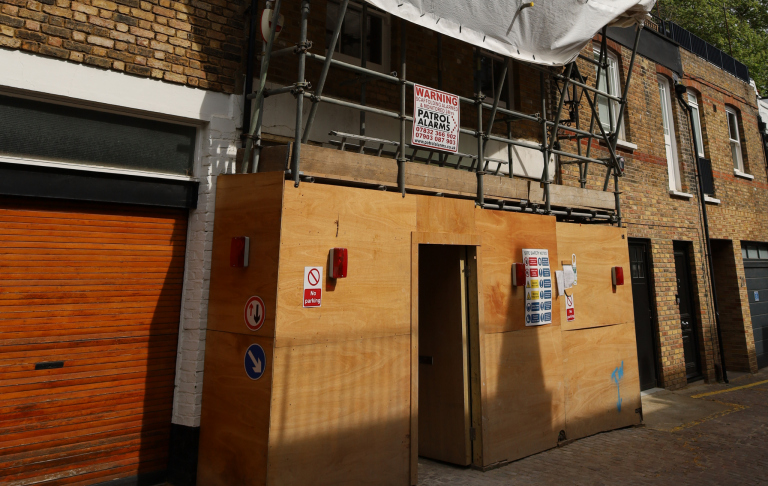
London residential property undergoing external refurbishment with scaffolding.

Why Do Micro-Location and Asset Quality Matter?

Anyone can search for property in Mayfair, Belgravia, Knightsbridge, Chelsea, Kensington or St John’s Wood.

But Prime Central London is not one market.

It is a collection of highly specific micro-markets, and sometimes the difference between two streets, or even two buildings on the same street, is material.

Orientation, outlook, natural light, floor level, garden access, building management, tenure, service charges, traffic, ceiling height and condition can all influence demand.

So can the eventual buyer profile.

A family looking for a long-term Chelsea home may evaluate a property very differently from an international buyer seeking a managed Knightsbridge residence or an investor assessing a refurbishment opportunity in Kensington.

That is why broad statements such as “London is down” or “Mayfair is strong” are rarely enough to make an investment decision.

Buying in the right postcode does not automatically mean buying the right asset.

The individual property still has to make sense.

Information Is Valuable. Execution Is More Valuable.

Relationships matter in Prime Central London.

So do reputation, information and timing.

Professional relationships can bring opportunities into view and help investors understand the circumstances around a potential acquisition.

But access alone does not create value.

The real work begins with appraisal.

Why does the opportunity exist?

What risks are hidden beneath the headline price?

What capital will be required?

How long could the project realistically take?

Who is the eventual end-user?

What happens if the market moves against the original assumption?

And is there still a credible investment case if the optimistic scenario does not materialise?

These questions are particularly important in a selective market because compromised assets and genuinely attractive opportunities can sometimes look surprisingly similar at first glance.

A cheap property can remain cheap.

An exceptional property acquired intelligently can be something very different.

Why Does Experience Matter More in a Difficult Market?

With more than 35 years of combined experience in the London property market, one lesson has become increasingly clear to us:

The deals you reject can be every bit as important as the deals you complete.

Experience is not simply knowing which neighbourhoods are desirable.

It is recognising when an asking price is unrealistic.

When a seller may genuinely transact.

When refurbishment could unlock value—and when it will simply create expense.

When a compromised lease or building issue can be resolved.

When the numbers have become too optimistic.

And when a property that looks impressive does not make an impressive investment.

This is where more difficult markets can become interesting.

When rising prices are no longer doing the work for everyone, judgement becomes more valuable.

Can Prime Central London Still Support Long-Term Capital Preservation?

For some families and investors, Prime Central London should not be viewed only through quarterly or annual price movements.

This longer-term perspective becomes particularly relevant during periods of uncertainty, when investors often return to property fundamentals rather than short-term market sentiment.

The relevant horizon may be ten, twenty or thirty years.

London remains an internationally significant city with finite supply in its most established central neighbourhoods. But that does not mean every London property will perform equally or that ownership itself guarantees a positive outcome.

Long-term capital preservation begins with asset quality and acquisition discipline.

Buy carefully.

Understand the downside.

Improve intelligently where there is a credible reason to do so.

Avoid unnecessary complexity.

Hold quality where the long-term case remains intact.

And consider what the asset may represent over a generation rather than simply what the market might say next quarter.

There are no guaranteed returns in property. Taxation, regulation, financing costs, currency movements and market conditions can all change.

That is precisely why risk needs to be understood as carefully as opportunity.

Even in the current softer market, activity at the highest levels demonstrates that international conviction in exceptional London assets has not disappeared. But sophisticated capital is increasingly selective about what it buys, at what price and for what purpose.

That distinction is important.

What Should Investors Take From the Current Market?

Prime Central London today requires more than confidence in London.

It requires:

  • deeper due diligence;
  • realistic comparable analysis;
  • disciplined negotiation;
  • careful assessment of tenure and building risk;
  • a clear understanding of refurbishment costs;
  • appropriate tax, legal and financing advice;
  • realistic exit assumptions;
  • and the willingness to walk away when those elements do not align.

That complexity is not necessarily a disadvantage.

In some circumstances, it is precisely what creates the opportunity.

When a market becomes more difficult to navigate, information, experience and execution become more valuable.

The question for an investor is therefore no longer simply:

“Is Prime Central London a good market to buy into?”

A better question is:

“Does this particular property offer the right relationship between acquisition price, asset quality, execution risk and realistic long-term value?”

That is a much harder question to answer.

But in today’s Prime Central London market, it is the one that matters.

Frequently Asked Questions

Is Prime Central London a good property investment in 2026?

Prime Central London remains selective rather than uniformly attractive. Softer pricing and greater negotiability can create opportunities, but investment quality depends on the individual asset, acquisition price, micro-location, condition, ownership costs and execution strategy.

Does buying below asking price mean a property is good value?

No. A discount measures the difference between asking and achieved price; it does not establish the underlying value of the property. Comparable evidence, tenure, condition, refurbishment requirements and realistic future demand all need to be considered.

Why does micro-location matter in Prime Central London?

Prime Central London consists of highly specific micro-markets. Values and buyer demand can vary between streets, buildings and individual properties because of factors such as outlook, natural light, tenure, floor level, building management, garden access and proximity to amenities.

Can refurbishment create value in Prime Central London?

It can, but only where the acquisition price and refurbishment economics work together. Construction costs, professional fees, regulation, programme risk, specification and eventual buyer demand all need to be assessed before assuming that a property requiring work represents an opportunity.

What should investors assess before buying Prime Central London property?

Investors should consider the acquisition basis, comparable evidence, seller circumstances, tenure, condition, refurbishment requirements, financing, taxation, regulation, micro-location, downside risk and realistic exit or long-term holding strategy before committing capital.

Explore How the Approach Works in Practice

Identifying value is only the first stage.

At The Collaborative London, we assess individual opportunities across acquisition, design, refurbishment and execution, with the objective of understanding where value can realistically be created and where risk outweighs the potential return.

Explore our Prime Central London Investment Approach →

This article provides general market commentary only and does not constitute investment, financial, legal or tax advice. Property values and investment outcomes can fall as well as rise, and individual circumstances should be reviewed with appropriate professional advisers.

By Jaffar Al-Saraj, Co-Founder & Director TCL
Expert Insight Series — The Collaborative London

Jaffar Al-Saraj is Co-Founder and Director of The Collaborative London. A former commercial property solicitor, he works across Prime Central London acquisition, development and investment strategy, bringing legal and commercial judgement to asset selection and execution.


Author

Share:

More Posts